
About the Author
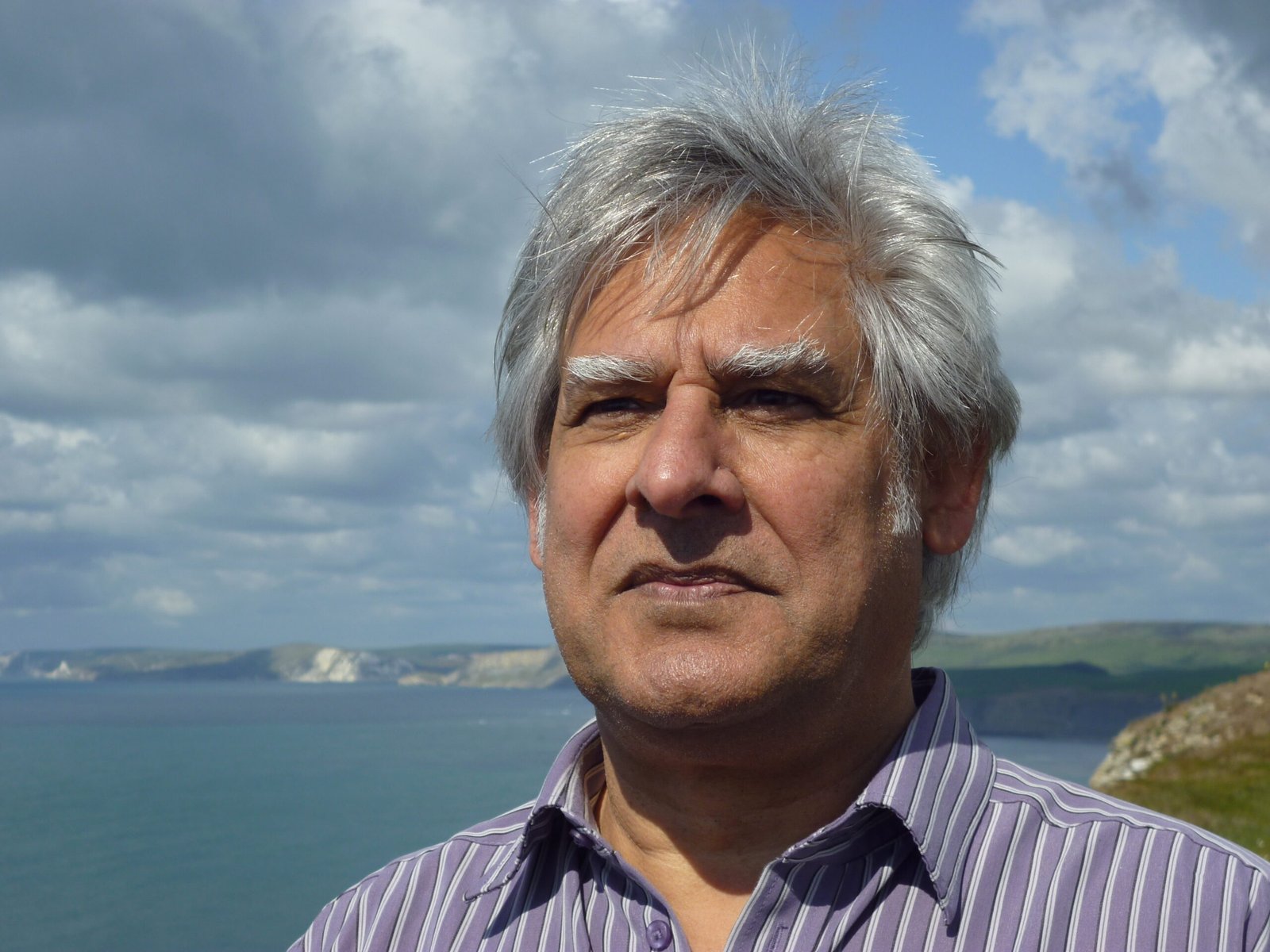
William Sinclair is an independent author, lifelong student of Eastern philosophy and esoteric traditions, and holds a BSc (Hons) in Chemistry from the University of Southampton.
His writing explores the meeting point between the disciplined world of science and the less easily explained realms of consciousness, self-mastery and spiritual awakening. Drawing upon decades of reading, reflection and personal exploration, he examines ideas about the mind, human potential and the deeper laws that may influence our experience of life.
He lives in Mid Wales, where the mountains, ancient landscapes and quiet paths provide both inspiration and an opportunity to step away from the noise of everyday life. When he is not writing, he can often be found exploring Welsh trails, walking the coast and clifftops, or playing one of his guitars.
But the story of how William came to write about these subjects began much earlier – in London, and with a bus pass.
A Red Rover Bus Pass and a World of Books
My life has been shaped not only by my experiences, but by the writings of some remarkable authors, both Eastern and Western. In many ways, the books I discovered during my early years became almost as influential as the people I encountered. They opened doors into worlds of thought that I could scarcely have imagined existed.
I was born in India, but when I was four years old my family moved to Britain, and we settled in London.
From around the age of eleven, my parents gave me the freedom to travel around London on my own. Armed with a Red Rover bus pass, I could travel virtually anywhere in London for a day.
To an eleven-year-old who was already fascinated by books, this was an extraordinary freedom.
London became my playground
I explored its streets, museums and landmarks, but increasingly I found myself drawn towards its bookshops. I would make my way into central London, where Charing Cross Road was lined with shops selling books on almost every subject imaginable.
And then there was Foyles.
At the time, it was reputed to be the largest bookshop in the world – a vast labyrinth of books in which a young reader could disappear for hours.
But Foyles was not my greatest discovery.

That came when I wandered into Cecil Court, the narrow little street just off Charing Cross Road that was, and remains, famous for its concentration of specialist booksellers.
I had discovered “Booksellers Row.”
At number 21 stood John M. Watkins.
For me, it was unlike any bookshop I had encountered before.
It was more than a shop selling books. It felt like a treasure trove – an Aladdin’s cave of ideas.
Here I discovered books on Eastern philosophy, Western philosophy, mysticism, yoga, spirituality, occultism and esoteric traditions. Subjects I had barely heard of were suddenly laid out before me.
Every visit revealed another book.
Another author.
Another question.
And another doorway into a world of knowledge. What makes that memory particularly remarkable is that John M. Watkins is still there today. The shop has survived the passing decades and has subsequently expanded into the adjoining premises at number 19. The little bookshop I discovered as a boy has therefore remained a physical link with the beginning of my own intellectual and spiritual journey.
Sixty Years of Searching. That journey never really ended.
Over the following six decades, I continued to explore the books and ideas I had first encountered in places such as Cecil Court.
My reading eventually carried me across an extraordinary range of traditions and thinkers: Patanjali, Yogi Ramacharaka – the pen name of William Walker Atkinson – Osho, Sri Swami Satchidananda, Edwin Arnold, Swami Sivananda, Aldous Huxley, Paul Brunton, Ramana Maharshi and the Dalai Lama, among many others.
My curiosity also led me into the more controversial and challenging territory of Aleister Crowley.
These authors could hardly have been more different from one another.
Some wrote about yoga and meditation. Others explored philosophy, mysticism, consciousness, self-development or the nature of reality. Some approached their subjects through ancient Eastern traditions, while others attempted to interpret those traditions through a Western perspective.
Yet beneath their differences I began to notice recurring questions.
What is the nature of the mind?
How do our thoughts influence the way we experience reality?
Can a person consciously transform themselves?
What is consciousness?
What lies behind our sense of individual identity?
Is there more to human existence than what can be experienced through the physical senses?
These questions have remained with me for more than sixty years.
I have not simply read these books and returned them to the shelf. I have lived with many of their ideas, questioned them, compared them and, where appropriate, incorporated them into my own understanding of life.
Some ideas have remained with me for decades.
Others have been discarded.
Some I understand very differently today from the way I understood them when I first encountered them.
Perhaps that is one of the most valuable things about a lifelong journey of enquiry: you are allowed to change your mind.
From Chemistry to Consciousness
There is an interesting tension at the heart of my journey.
I studied Chemistry at the University of Southampton, a discipline grounded in observation, evidence and the physical world.
Yet alongside that scientific education, I developed a growing fascination with questions that science alone did not appear to answer for me.
What is consciousness?
What is the nature of thought?
Can the mind be trained?
What is the relationship between the individual and the universe in which we exist?
And why have human beings, across cultures and throughout history, continued to search for something beyond the immediately visible world?
I do not see science and philosophy as necessarily being opposing forces.
Science teaches us to question, investigate and avoid accepting claims without examination.
Philosophy invites us to question the assumptions upon which our understanding of reality is built.
And the Eastern traditions provide an entirely different perspective: rather than simply theorising about the nature of consciousness, they often encourage us to investigate our own experience directly.
It is this meeting of ideas that continues to interest me.
Why I Write
After all these years, I feel that the time has come to put some of what I have learned onto the page.
I am not attempting to reproduce the teachings of the authors who influenced me, nor am I suggesting that I have discovered definitive answers to the questions they explored.
Instead, I want to take some of the knowledge, ideas and insights that have accompanied me throughout my life and examine them through a modern lens.
The world has changed considerably since many of these books were written.
The language of their authors can sometimes seem archaic, obscure or difficult for the modern reader. Ideas expressed through the language of mysticism, metaphysics or esoteric philosophy can occasionally become more accessible when examined in contemporary terms.
That is what I hope to do.
To explore. To question. To connect ideas.
And, where possible, to make them understandable and useful to the modern seeker.
William Walker Atkinson
One author who has held a particularly enduring fascination for me is William Walker Atkinson writing under the name: Yogi Ramacharaka.
Writing prolifically during the early years of the twentieth century, Atkinson published under several names and explored subjects including willpower, concentration, mental influence, personal development and the potential of the human mind.
Some of his ideas may appear unconventional to the modern reader.
Yet much of what he wrote more than a century ago remains remarkably relevant to questions we continue to ask today.
How do we develop concentration in an age of constant distraction?
How do we strengthen our will?
How much influence do our thoughts have over our actions?
Can we consciously change the patterns that govern our lives?
And what might happen if we learned to use our minds more deliberately?
These are among the questions I hope to explore through Zen Self Mastery.
The Journey Continues
Looking back, it is remarkable to think that this journey began with an eleven-year-old boy travelling independently through London with a Red Rover bus pass.
I thought I was simply looking for books.
What I found was something much larger.
I discovered philosophy.
I discovered Eastern thought.
I discovered mysticism and esoteric traditions.
And, perhaps most importantly, I discovered a set of questions that I have continued asking for more than sixty years.
The journey has taken me a long way from that little street in London.
Yet in another sense, I have never really left it.
Because the questions I encountered as a boy in Cecil Court are still the questions that interest me today:
Who are we?
What is the mind?
What are we capable of becoming?
And what lies beyond what we currently understand?
It all began with a bookshop in Cecil Court.
And, in a sense, I am still wandering through its shelves.